
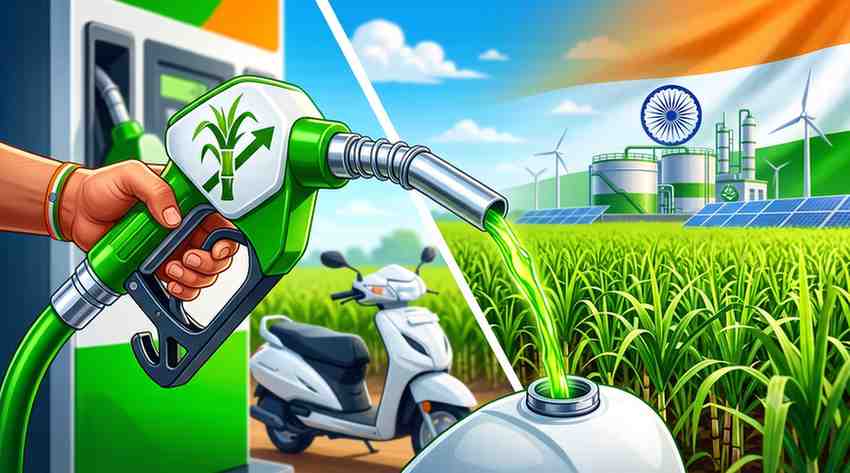
India is set to implement E20 fuel, a blend of 20% ethanol and 80% petrol, aiming to enhance energy security and reduce carbon emissions. This initiative is part of the country’s broader strategy to transition towards renewable energy sources. New Delhi, July 2026 — The Indian government has announced a significant push towards adopting E20
India is set to implement E20 fuel, a blend of 20% ethanol and 80% petrol, aiming to enhance energy security and reduce carbon emissions. This initiative is part of the country’s broader strategy to transition towards renewable energy sources.
New Delhi, July 2026 — The Indian government has announced a significant push towards adopting E20 fuel, a blend of 20% ethanol and 80% petrol, as part of its strategy to enhance energy security and promote sustainable fuel alternatives. This initiative aligns with the global shift towards cleaner energy sources and aims to reduce the country’s reliance on imported fossil fuels.
Why Did India Choose E20 Fuel?
The decision to adopt E20 fuel stems from India’s commitment to increasing the share of renewable energy in its fuel mix. With rising fuel prices and a growing demand for energy, the government sees ethanol, primarily sourced from sugarcane, as a viable alternative. Experts believe that this shift not only addresses energy security but also supports the agricultural sector by providing farmers with a stable market for their produce.
What Does This Mean for India?
The implementation of E20 fuel is expected to have far-reaching implications for both the economy and the environment. Economically, it aims to save foreign exchange by reducing fuel imports, a critical concern for a country that imports about 85% of its oil. Environmentally, the use of ethanol is projected to lower greenhouse gas emissions, contributing to India’s climate change commitments.
What Are the Key Benefits of E20 Adoption?
- Enhanced energy security by reducing dependence on fossil fuel imports.
- Support for local farmers through increased demand for ethanol production.
- Lower greenhouse gas emissions, aiding in India’s climate targets.
- Potential for economic savings in the long run due to reduced import bills.
Moreover, the transition to E20 is expected to create new job opportunities in the biofuel sector, further bolstering rural economies. The government’s focus on this initiative reflects a broader policy direction aimed at sustainable development, aligning with global trends in energy consumption.
What Happens Next?
As India moves forward with the E20 fuel rollout, stakeholders are advised to monitor the implementation process closely. The success of this initiative will depend on infrastructure readiness, public acceptance, and regulatory support for biofuel production. Additionally, the government must ensure that the quality of E20 fuel meets safety standards to avoid potential vehicle performance issues. Overall, the E20 adoption marks a critical step towards a more sustainable and self-reliant energy future for India.












Leave a Comment
Your email address will not be published. Required fields are marked with *