
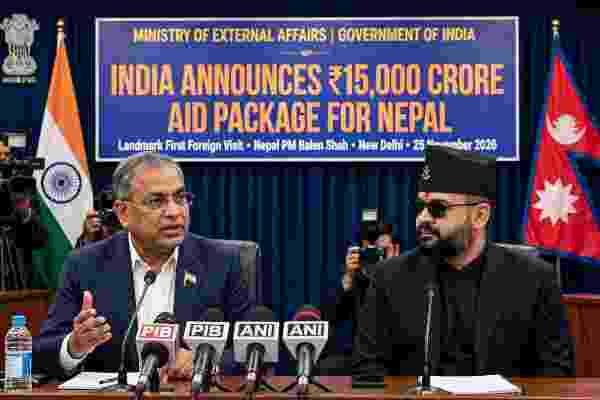
New Delhi, November 2026 — Nepal Prime Minister Balen Shah’s 50-hour visit to India on November 22 and 23 has signaled a major reset in bilateral ties. What many feared would be a period of diplomatic frost has instead produced a ₹15,000 crore Indian development package and a sweeping set of bilateral agreements. From Domestic
New Delhi, November 2026 — Nepal Prime Minister Balen Shah’s 50-hour visit to India on November 22 and 23 has signaled a major reset in bilateral ties. What many feared would be a period of diplomatic frost has instead produced a ₹15,000 crore Indian development package and a sweeping set of bilateral agreements.
From Domestic Isolation to Delhi When the rapper-turned-politician rode a wave of Gen-Z support to power, he vowed to break from Nepal’s old political guard. Shah pledged to focus strictly on domestic reforms, crack down on corruption, and bar ministers from meeting foreign envoys to avoid accusations of bowing to regional powers.
His office even declined meetings with U.S. envoy Sergio Gor and Indian Foreign Secretary Vikram Misri earlier this year. Yet by choosing India for his first bilateral foreign trip, Shah revived a long-standing tradition broken in 2024 when former Prime Minister K.P. Sharma Oli visited China first.
Crisis as a Catalyst A devastating reality drove the diplomatic thaw: catastrophic floods in August 2026 claimed numerous lives and wiped out roads, bridges, and homes across Nepal. Pointing to melting Himalayan glaciers and regional emissions, Shah underscored the urgent need for external support.
India stepped in with ₹15,000 crore—roughly $1.62 billion—targeted at post-flood reconstruction, family rehabilitation, long-term infrastructure, and stronger disaster management capacity.
Eight Pacts, Six Big Projects Beyond emergency relief, both nations signed eight Memoranda of Understanding covering ISRO-backed satellite communication via GSAT-9, forensic sciences, police and civil services training, healthcare, traditional medicine, urban planning, and agriculture.
Six flagship connectivity initiatives aim to lock in deeper economic integration:
- Energy & Fuel: The 669-megawatt Lower Arun Hydroelectric Project will supply clean power to India while generating revenue for Nepal, complemented by the Motihari–Amlekhgunj petroleum pipeline and a new fuel terminal in Jhapa.
- Borders & Trade: A new bridge over the Mahakali River at Darchula and an Integrated Check Post at Banbasa in Uttarakhand will streamline cross-border cargo and customs.
- Cultural Links: A weekly 600-kilometer express train connecting Janakpur and Ayodhya will boost religious tourism and people-to-people ties.
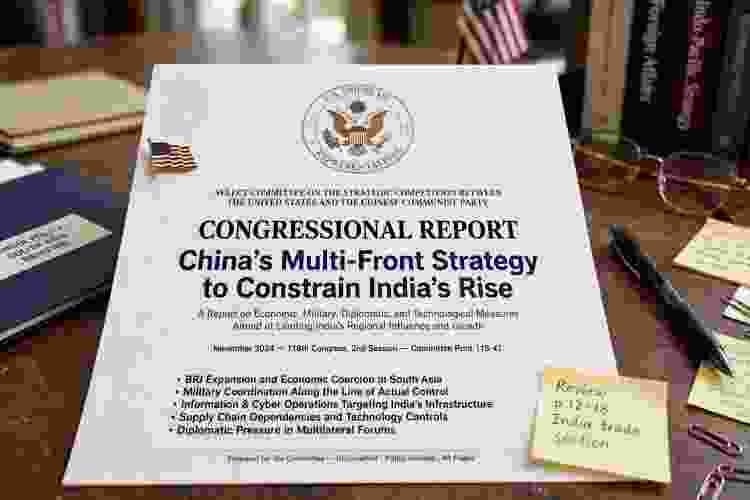
The China Equation The outreach unfolds as Beijing deepens its footprint in Nepal through Belt and Road Initiative investments and a proposed Kathmandu–Tibet rail link. For New Delhi, the concern is less about Nepal receiving aid and more about strategic vulnerability near the Siliguri Corridor and debt-trap precedents like Sri Lanka’s Hambantota Port.
A Balancing Act Ahead Shah’s Delhi trip does not mean Kathmandu is walking away from Beijing. Still, by pairing swift disaster relief with concrete infrastructure, India has reaffirmed its role as Nepal’s most dependable neighbor—turning a moment of crisis into a renewed foundation of trust.







Leave a Comment
Your email address will not be published. Required fields are marked with *