
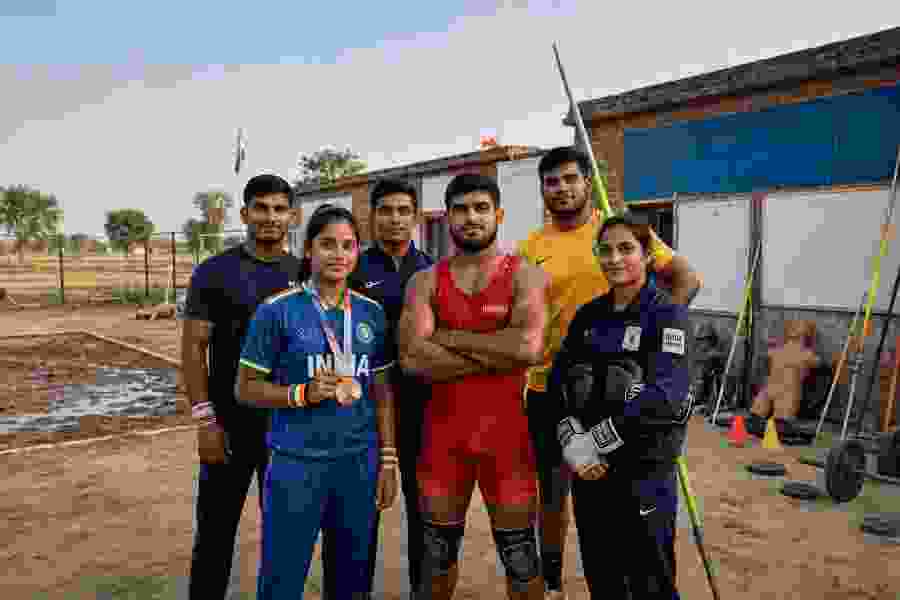
New Delhi, November 2026 — Holding just 2% of India’s population, Haryana has quietly become the backbone of the country’s Olympic ambitions. Since the 2008 Beijing Games, athletes born in the state have delivered half of India’s 22 non-hockey Olympic medals, turning one small northern state into a national medal factory. The Paris Proof At
New Delhi, November 2026 — Holding just 2% of India’s population, Haryana has quietly become the backbone of the country’s Olympic ambitions. Since the 2008 Beijing Games, athletes born in the state have delivered half of India’s 22 non-hockey Olympic medals, turning one small northern state into a national medal factory.
The Paris Proof At the 2024 Paris Olympics, roughly one in every five of India’s 117 athletes came from Haryana, including all six wrestlers and four of six boxers. Four of India’s six medals featured Haryana-born talent—Neeraj Chopra, Manu Bhaker, Sarabjot Singh, and Aman Sehrawat—with Jhajjar district alone accounting for three podium finishes.
Busting the Genetics and Diet Myths Popular theories credit Haryana’s dominance to superior genetics, traditional akharas, or a dairy-rich diet. The data tells a different story. While Haryana averages 1,105 grams of daily milk availability per person, Punjab (1,245 grams) and Rajasthan (1,171 grams) rank even higher without matching its medal haul. Central funding is not the secret either: Haryana reportedly received less than 3% of the Khelo India budget.
Turning Sport from a Gamble into a Career Haryana’s real edge is an ecosystem that transforms athletics from a risky dream into a dependable livelihood.
- Role Models: Vijender Singh’s 2008 boxing bronze turned Bhiwani into India’s “Little Cuba,” giving rural families living proof that Olympic glory is within reach.
- Cash and Job Security: Alongside generous payouts—₹6 crore for gold, ₹4 crore for silver, and ₹2.5 crore for bronze—the state provides a 3% reservation quota in Group C government jobs and direct placements in the sports department.
- The Armed Forces Pipeline: Strong military recruitment reinforces this safety net, with the armed forces supplying 24 of India’s 117 Paris Olympians.
Cracks and Paradoxes in the Factory The system is far from flawless. Haryana’s medals remain concentrated in wrestling, boxing, shooting, and javelin, and several stars—including Ravi Kumar Dahiya and Aman Sehrawat—trained across the border at Delhi’s Chhatrasal Stadium. Even sharper is the social paradox: despite recording India’s lowest sex ratio in 2011 and weathering the 2023 women wrestlers’ protests, Haryana’s daughters—Saina Nehwal, Sakshi Malik, Manu Bhaker, and the Phogat sisters—have spearheaded its global rise.
A Blueprint for the Rest of India Haryana’s success is not magic; it is a structured chain of local heroes, grassroots clubs, regular competition, and guaranteed employment. If other Indian states adopt a “one district, one sport” focus, prioritize job security over post-medal cash, recruit local champions as coaches, and back female athletes from day one, India’s Olympic story will no longer rely on a single state.






Leave a Comment
Your email address will not be published. Required fields are marked with *