
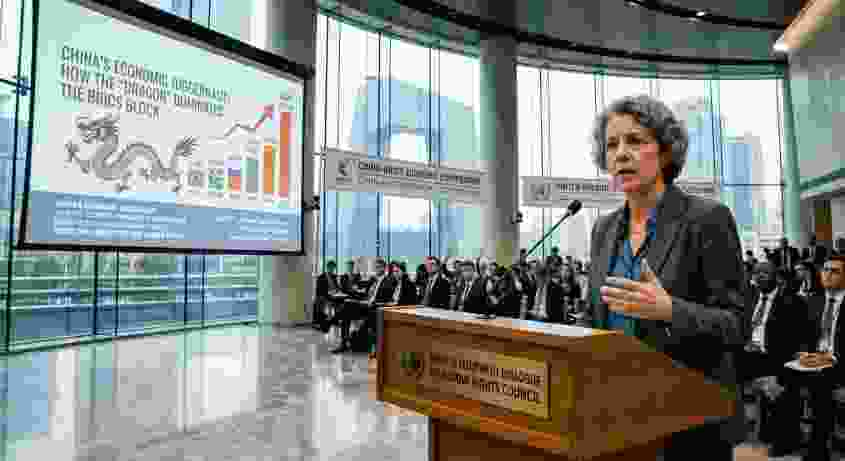
New Delhi, September 2026 — China’s economic explosion over the past two decades hasn’t just shaped the global market; it has entirely consumed the BRICS alliance. What began as a coalition of equals to amplify the voices of emerging economies has effectively morphed into a platform dominated by a single, $20 trillion heavyweight. The 2009
New Delhi, September 2026 — China’s economic explosion over the past two decades hasn’t just shaped the global market; it has entirely consumed the BRICS alliance. What began as a coalition of equals to amplify the voices of emerging economies has effectively morphed into a platform dominated by a single, $20 trillion heavyweight.
The 2009 Tipping Point When BRICS was conceptualised in 2006, China’s $2.7 trillion GDP was actually smaller than the combined $3.4 trillion of its partner nations. But the landscape shifted violently and permanently in 2009 when China’s economy officially overtook the rest of the bloc combined. Fast forward to today: if you combine the economies of Brazil, Russia, India, and South Africa, and double that number, China is still larger.
Engineering a $20 Trillion Miracle This dominance was meticulously engineered. Following the 2008 global financial crisis, while G7 economies stagnated, Beijing injected a massive financial stimulus. They built world-class infrastructure—highways, high-speed rail, and ports—and focused aggressively on mass manufacturing. By becoming the global hub for steel, chemicals, and electronics, China deeply integrated itself into global supply chains, transforming into an unstoppable export engine.
The Per Capita Reality Check India proudly stands as the second-largest economy in the BRICS framework, but the gap remains staggering. While India has demonstrated robust growth, its per capita GDP currently sits at approximately $2,800. China’s per capita GDP is a formidable $12,000. Even when factoring in Purchasing Power Parity (PPP), the economic prosperity and disposable income of the average Chinese citizen vastly outpace their BRICS counterparts.
Leveraging the Checkbook With a $20 trillion war chest, Beijing doesn’t need to dictate terms to its allies outright—its wealth does the talking. By extending massive infrastructure loans to nations like Sri Lanka and the Maldives in the Indian Ocean, China uses its economic gravity to pull developing nations into its orbit, securing unmatched bargaining power on the global stage.
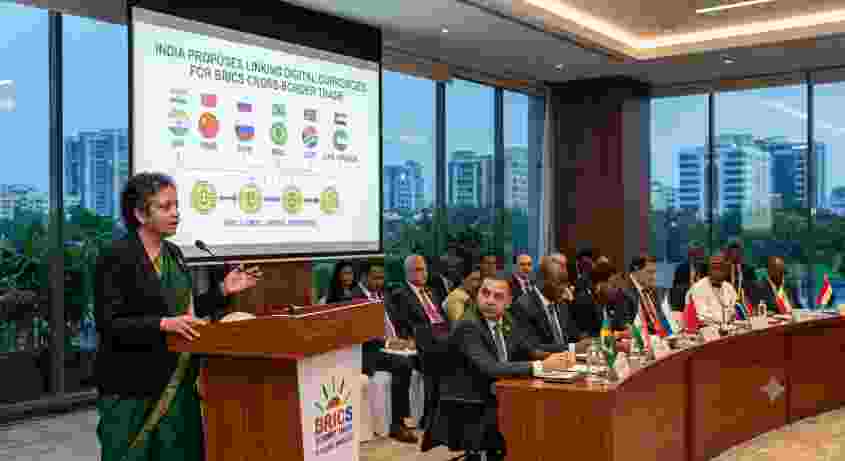
India’s Strategic Resistance Recognising this severe imbalance, New Delhi refuses to rely solely on BRICS. India actively pursues a “multi-alignment” strategy, engaging with the G20, SCO, and the Quad to counterbalance Beijing. Most notably, while Russia and China heavily push for the “de-dollarization” of global trade, India exercises caution. New Delhi fears that dethroning the US Dollar would simply crown the Chinese Yuan as the dominant global currency. Instead, India is pushing for interconnected, interoperable digital currencies for fair trade.
Bottom Line The original vision of BRICS as a balanced partnership of emerging powers is an illusion. Two decades in, the bloc operates heavily under the shadow of the Chinese dragon, leaving nations like India to carefully navigate an alliance where one member holds all the economic cards.









Leave a Comment
Your email address will not be published. Required fields are marked with *