
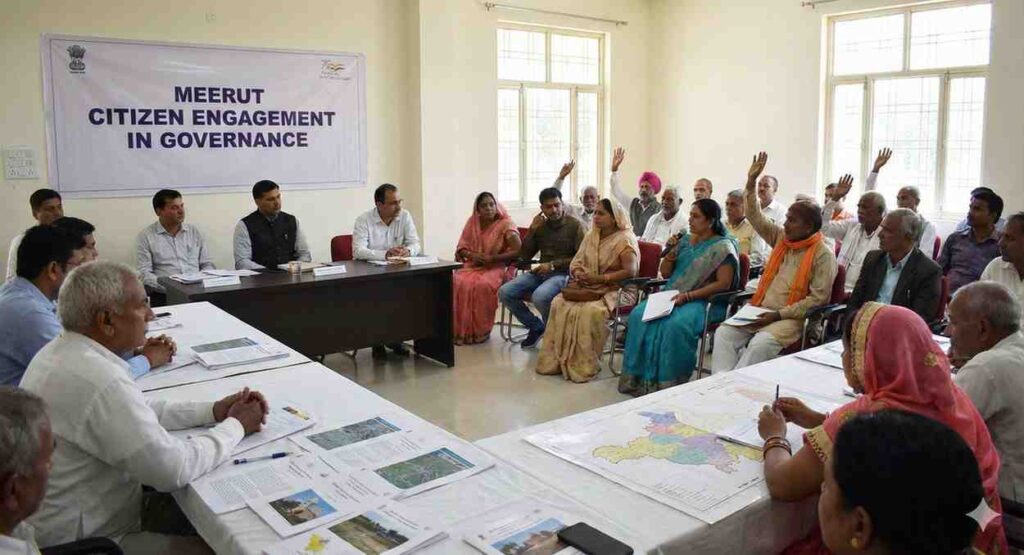
Meerut, a city in Uttar Pradesh known for its rich history and vibrant culture, is undergoing significant changes as it strives to modernize and meet the needs of its growing population. One of the most important aspects of this transformation is community engagement in governance. As India pushes for greater civic participation, the question arises:
Meerut, a city in Uttar Pradesh known for its rich history and vibrant culture, is undergoing significant changes as it strives to modernize and meet the needs of its growing population. One of the most important aspects of this transformation is community engagement in governance. As India pushes for greater civic participation, the question arises: are the citizens of Meerut truly involved in shaping the decisions that affect their daily lives?
The Shift Toward Inclusive Governance
In recent years, there has been a notable shift towards more inclusive governance across Indian cities, including Meerut. The push for citizen participation has gained momentum as local government bodies recognize the need for greater transparency, accountability, and collaboration with the public. As a part of this trend, Meerut has started implementing programs that seek to involve its residents in decision-making processes.
A key aspect of this shift is the introduction of online platforms for citizens to voice their concerns, suggestions, and feedback. Websites like the Meerut Municipal Corporation’s official portal provide a platform where citizens can easily file grievances, track the status of local issues, and even suggest new projects. This digital outreach is a step toward modernizing governance in Meerut and ensuring that citizens can engage with local administration more effectively.
Local Initiatives and Citizen Participation
Meerut’s local administration has also undertaken various initiatives to promote community involvement in governance. The Jal Jeevan Mission, which aims to provide piped water to every household in the city, is an excellent example of community engagement. Local residents are involved in monitoring the implementation of this project, ensuring that resources are distributed equitably and that the work is progressing according to plan. Citizens are also given the opportunity to provide feedback on the quality of services, contributing to a more responsive and accountable system.
Additionally, the Swachh Bharat Mission (Clean India Campaign) has seen active participation from Meerut’s citizens. The city has organized cleanliness drives and waste management workshops, where locals are not just participants but also stakeholders in the planning and execution of these initiatives. By involving the community in these efforts, Meerut aims to foster a sense of responsibility among its citizens while also improving the overall quality of urban life.
The Role of NGOs and Civil Society
Non-governmental organizations (NGOs) and civil society groups play a crucial role in community engagement in Meerut. Organizations such as Meerut Jan Kalyan Samiti and Nayee Disha have been instrumental in promoting awareness about civic rights and responsibilities. These groups engage directly with the local population through campaigns, workshops, and advocacy programs, encouraging citizens to actively participate in governance.
These organizations often act as a bridge between the public and the government, helping to articulate the needs of the community and pushing for policies that reflect those needs. Their work in areas like health, education, and rural development has strengthened the dialogue between the government and the people, ensuring that local governance remains grounded in the needs of the citizens.
Challenges to Effective Community Engagement
While there have been several positive steps toward greater community engagement in Meerut, there are still significant challenges. One of the main obstacles is the lack of awareness among citizens about their rights and the opportunities available for participation. Despite the availability of platforms for feedback and grievance redressal, many residents remain unaware of how to access these services or feel disconnected from the decision-making process.
Additionally, there is a need for more structured, inclusive forums for civic participation. While local councils and community meetings exist, they are often limited in scope and lack sufficient outreach to marginalized groups, such as the elderly, women, and lower-income communities. Without ensuring that these voices are heard, community engagement efforts risk being incomplete or biased toward certain groups.
Another challenge is the lack of effective coordination between the different stakeholders involved in community engagement. While local administration, NGOs, and civil society groups are working to improve governance, their efforts often operate in silos, reducing their overall impact.
The Path Forward
For Meerut to truly succeed in fostering a participatory governance model, it must address these challenges by increasing civic education and awareness programs. Citizens must be informed about the various channels through which they can engage with local government, as well as the importance of their participation in the democratic process.
Furthermore, there is a need to create more inclusive platforms that ensure the representation of all segments of society. Community meetings, online platforms, and public forums should be designed to encourage participation from marginalized groups, ensuring that every voice is heard in the governance process.
Lastly, collaboration among government bodies, NGOs, and citizens must be strengthened. By working together, Meerut can create a governance model that is not only transparent and accountable but also truly reflective of the needs and aspirations of its residents.
Conclusion
Meerut’s journey toward greater community engagement in governance is still evolving. While the city has made strides in involving its citizens in key decision-making processes, there is much more work to be done. By addressing existing challenges and fostering a more inclusive, informed, and collaborative approach, Meerut can set a model for participatory governance that empowers its citizens and leads to sustainable development.












Leave a Comment
Your email address will not be published. Required fields are marked with *