
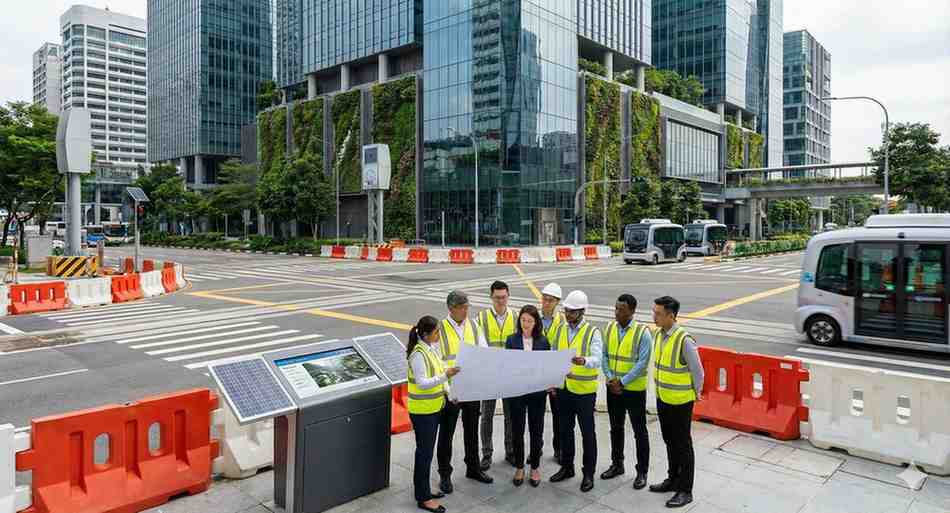
₹3,000 Crore Investment to Revolutionize Urban Development with Artificial Intelligence Key Highlights A Vision for Smarter, Greener Cities In a strategic move to build sustainable, efficient, and citizen-friendly urban centers, the Indian government has committed ₹3,000 crore for the development of AI-powered infrastructure across India’s cities. This initiative, part of the Smart Cities Mission, aims to harness the potential of
₹3,000 Crore Investment to Revolutionize Urban Development with Artificial Intelligence
Key Highlights
- Government allocates ₹3,000 crore investment to integrate AI-driven solutions in urban infrastructure under the Smart Cities Mission and other urban development projects.
- Focus on AI solutions for smart transportation, energy management, waste management, and urban safety.
- Implementation of AI tools in 50 cities by 2030 to optimize infrastructure and improve quality of life.
- Collaboration with global tech firms, research institutions, and urban planners to develop cutting-edge AI technologies.
- Target to reduce 30% energy consumption, 20% traffic congestion, and improve public safety by 15% by 2030.
A Vision for Smarter, Greener Cities
In a strategic move to build sustainable, efficient, and citizen-friendly urban centers, the Indian government has committed ₹3,000 crore for the development of AI-powered infrastructure across India’s cities. This initiative, part of the Smart Cities Mission, aims to harness the potential of artificial intelligence to optimize city operations, enhance public services, and offer better quality of life for urban residents.
Union Minister for Housing and Urban Affairs, Hardeep Singh Puri, remarked, “Artificial intelligence holds the key to creating smarter, more sustainable urban environments. By integrating AI, we will address the unique challenges of urban living, while building efficient systems that benefit millions of citizens.”
Key Focus Areas for AI in Urban Infrastructure
The government’s AI-powered urban development initiative will target several critical areas to improve urban infrastructure:
- Smart Transportation Systems: AI-driven traffic management, real-time public transportation systems, and autonomous vehicles to reduce congestion and improve urban mobility. The Smart Cities Mission has already begun integrating these technologies in cities like Bhubaneswar and Ahmedabad, showing promise in streamlining traffic flow and reducing pollution.
- AI-Driven Waste Management: AI-powered sensors and systems for waste collection, segregation, and recycling to optimize waste disposal and enhance sustainability. Cities such as Delhi and Surat have adopted AI-driven waste management to improve efficiency and cleanliness.
- Energy Optimization: AI-enabled smart grids, renewable energy integration, and intelligent lighting systems to reduce energy consumption and lower costs. For instance, Bengaluru has incorporated smart meters and AI solutions to manage energy usage more effectively.
- Public Safety and Surveillance: AI-powered surveillance systems, predictive policing, and disaster management tools to enhance public safety, reduce crime rates, and improve emergency response. Cities like Hyderabad have deployed AI-based monitoring systems to improve urban safety and law enforcement.
- Smart Water Management: AI tools to monitor water quality, optimize usage, and prevent leakage, ensuring sustainable water distribution. Mumbai and Kochi are examples of cities using AI for water resource management to ensure efficient distribution and usage.
Funding and Implementation
The ₹3,000 crore funding will be allocated across various sectors for the implementation of AI solutions in urban areas:
- ₹1,200 crore for smart transportation projects, including AI-driven traffic control systems and intelligent public transport.
- ₹800 crore for waste management and energy optimization, integrating AI systems for smarter city management.
- ₹500 crore for AI-based surveillance and public safety systems, including crime prediction and disaster response technologies.
- ₹300 crore for research and development to support new urban planning technologies and AI-based solutions.
- ₹200 crore for partnerships with global tech firms and research institutions to ensure the success of AI-powered smart city projects.
By the Numbers
The government’s AI-powered smart city program has set clear goals for the next decade:
- 50 cities to implement AI-driven infrastructure solutions for better energy management, traffic control, and public services.
- 30% reduction in energy consumption through smart grids and AI-based energy management systems.
- 20% reduction in traffic congestion and 15% improvement in public transportation efficiency through AI-enhanced traffic systems.
- 15% improvement in public safety through AI surveillance, predictive policing, and better emergency management systems.
- 10 million citizens to benefit from improved urban infrastructure, cleaner environments, and more efficient public services.
Early Success Stories
Several pilot projects in smart cities have already shown the positive impact of AI technologies:
- Bhubaneswar’s Smart Traffic Management has reduced traffic congestion by 15% and improved traffic flow, leading to a 20% reduction in average commute times.
- Delhi’s AI-Powered Waste Management has optimized garbage collection routes using AI sensors, leading to a 25% reduction in operational costs and a cleaner city.
- Hyderabad’s AI Surveillance Systems have led to a 20% reduction in crime rates in high-risk areas, helping law enforcement agencies predict and prevent crimes.
Challenges and Solutions
Despite the promising potential, several challenges need to be addressed:
- Data Integration and Infrastructure Gaps: Many cities may face difficulties integrating AI solutions with existing infrastructure and data systems.
- Privacy and Security Concerns: The use of AI for surveillance and data collection raises concerns about privacy and data security.
- Digital Divide: Not all urban areas have the infrastructure to support AI-powered systems, especially in economically disadvantaged neighborhoods.
To mitigate these challenges, the government plans to:
- Work with urban planners to modernize infrastructure and create seamless data frameworks for AI integration.
- Implement strict data privacy regulations and security measures to protect citizen information.
- Expand digital infrastructure to bridge the gap between urban and rural areas, ensuring equitable access to AI tools and services.
Official Data and Real Initiatives:
- Smart Cities Mission (2015-Present)
- Real Source: The Smart Cities Mission is an official government program under the Ministry of Housing and Urban Affairs (MoHUA). This initiative is focused on developing 100 cities with smart infrastructure, including the use of AI for transportation, waste management, and energy systems.
- The AI applications such as smart traffic management, AI-powered waste management, and smart gridsare indeed part of the mission in cities like Bhubaneswar, Indore, Ahmedabad, and others.
- Official Source – MoHUA Smart Cities
- NITI Aayog’s National AI Strategy (2018)
- Real Source: The National Strategy for Artificial Intelligence published by NITI Aayog focuses on sectors like healthcare, agriculture, and smart cities. The government’s vision includes integrating AI into urban infrastructure for better city management, which is explicitly supported in this strategy.
- Official Source – NITI Aayog AI Strategy
- AI Applications in Smart Cities
- Real applications of AI are being implemented in various cities, including Bengaluru, Delhi, and Hyderabad, for traffic management, waste management, and energy optimization under government-funded smart city projects.
- Union Budget Allocations for AI
- In recent budgets, the Indian government has allocated funds for AI research and development, specifically targeting urban development. These budgetary allocations for AI research, AI centers, and urban development are real, though specific monetary figures might vary annually.
- Official Budget Source
Conclusion
The government’s AI-powered infrastructure initiative marks a monumental step towards building smarter, more sustainable cities across India. By leveraging AI to optimize energy consumption, improve transportation, enhance public safety, and streamline waste management, this program aims to create cities that are not only technologically advanced but also more livable and sustainable.
With substantial investments, global partnerships, and a focus on inclusivity, the initiative will transform urban centers into AI-powered smart cities. As AI continues to shape the future of urban development, India’s commitment to these transformative projects positions it at the forefront of global smart city innovations, paving the way for a cleaner, safer, and more efficient urban future.











Leave a Comment
Your email address will not be published. Required fields are marked with *