
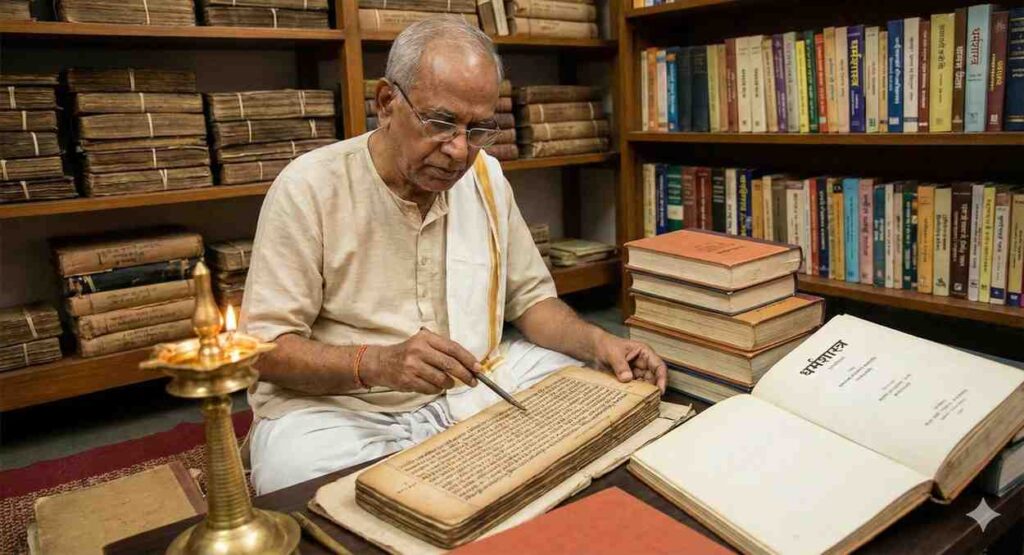
The vast body of Hindu scriptures is divided into two categories: the Vedas, considered shruti (divinely revealed), and the Shastras, regarded as smriti (remembered). While the Vedas provide the spiritual and cosmic foundation of Hindu philosophy, the Shastras serve as practical manuals that translate the Vedic principles into actionable guidelines for daily life. Together, they form a complementary framework
The vast body of Hindu scriptures is divided into two categories: the Vedas, considered shruti (divinely revealed), and the Shastras, regarded as smriti (remembered). While the Vedas provide the spiritual and cosmic foundation of Hindu philosophy, the Shastras serve as practical manuals that translate the Vedic principles into actionable guidelines for daily life. Together, they form a complementary framework that addresses both metaphysical and worldly aspects of existence.
What Are the Vedas and Shastras?
The Vedas are the oldest and most authoritative Hindu texts, comprising four primary scriptures: Rigveda, Samaveda, Yajurveda, and Atharvaveda. They explore themes like cosmic order (rita), the nature of the self (atman), and ultimate reality (Brahman), while also prescribing rituals and hymns for worship.
The Shastras, on the other hand, are interpretative texts that expand upon the Vedas. Derived from the root śās, meaning “to instruct,” the Shastras provide systematic knowledge on various domains, such as ethics, governance, health, relationships, and spiritual practice. Prominent Shastras include:
- Dharma Shastras: Ethical and legal codes, such as the Manusmriti.
- Arthashastra: A treatise on statecraft and economics by Kautilya (Chanakya).
- Yoga Shastras: Texts like Patanjali’s Yoga Sutras on physical and mental discipline.
- Ayurveda Shastras: Medical guides like the Charaka Samhita.
How the Shastras Complement the Vedas
- Translating Abstract Principles into Practical Guidelines:
- The Vedas outline universal truths and cosmic principles, such as dharma (righteousness), karma (cause and effect), and moksha (liberation).
- The Shastras interpret and adapt these principles to societal contexts. For instance, while the Vedas emphasize dharma as a cosmic law, the Dharma Shastras define specific duties for individuals based on their life stages (ashramas) and roles (varnas).
- Expanding Ritual Practices:
- The Vedas prescribe rituals for cosmic harmony, often in abstract terms.
- The Grihya Sutras and Kalpa Shastras detail these rituals for householders and priests, making them accessible and executable.
- Addressing Governance and Social Order:
- While the Vedas focus on spiritual and cosmic harmony, the Arthashastra applies these principles to governance, economics, and politics. It emphasizes ethical leadership while offering pragmatic strategies for statecraft.
- Integrating Health and Well-being:
- The Atharvaveda contains hymns related to healing and medicine, forming the basis for Ayurveda.
- Texts like the Charaka Samhita and Sushruta Samhita expand this knowledge into comprehensive systems of holistic health care.
- Fostering Individual Growth:
- The Upanishads, as part of the Vedic literature, delve into self-realization and the unity of atman and Brahman.
- The Yoga Shastras complement this by providing practical techniques, such as asanas (postures) and pranayama (breath control), to achieve spiritual progress.
Interplay Between Vedas and Shastras
| Aspect | Vedas | Shastras |
| Nature | Eternal and divinely revealed (shruti). | Human interpretations of Vedic principles (smriti). |
| Focus | Cosmic and spiritual truths. | Practical application of those truths. |
| Rituals | Abstract hymns and sacrifices (yajna). | Detailed instructions for rituals and ceremonies. |
| Ethics | General principles like rita and dharma. | Specific duties and laws for individuals and society. |
| Spiritual Practice | Philosophical inquiry into liberation (moksha). | Techniques like yoga and meditation for achieving liberation. |
Relevance in Modern Times
The Vedas and Shastras continue to provide guidance in both spiritual and practical domains:
- Ethical Living: The principles of dharma and karma outlined in the Vedas are interpreted in the Shastras to guide ethical behavior in a contemporary context.
- Wellness and Mindfulness: Practices from the Yoga Shastras and Ayurveda Shastras are globally recognized for promoting mental and physical well-being.
- Governance and Leadership: Insights from the Arthashastra on ethical leadership and strategic governance remain relevant in modern policymaking and business management.
Critiques and Adaptations
While the Shastras complement the Vedas, they have also faced criticism for certain interpretations that may seem outdated, such as rigid social hierarchies and gender roles. Modern scholars advocate contextualizing these texts, extracting their core values while discarding elements inconsistent with contemporary ethics.
Conclusion
The Shastras, as guides, bridge the philosophical depth of the Vedas with the practical needs of daily life. Together, they offer a holistic framework for spiritual growth, ethical living, and societal harmony. By understanding and integrating these teachings, we can navigate the complexities of modern life while staying rooted in timeless wisdom.












Leave a Comment
Your email address will not be published. Required fields are marked with *