
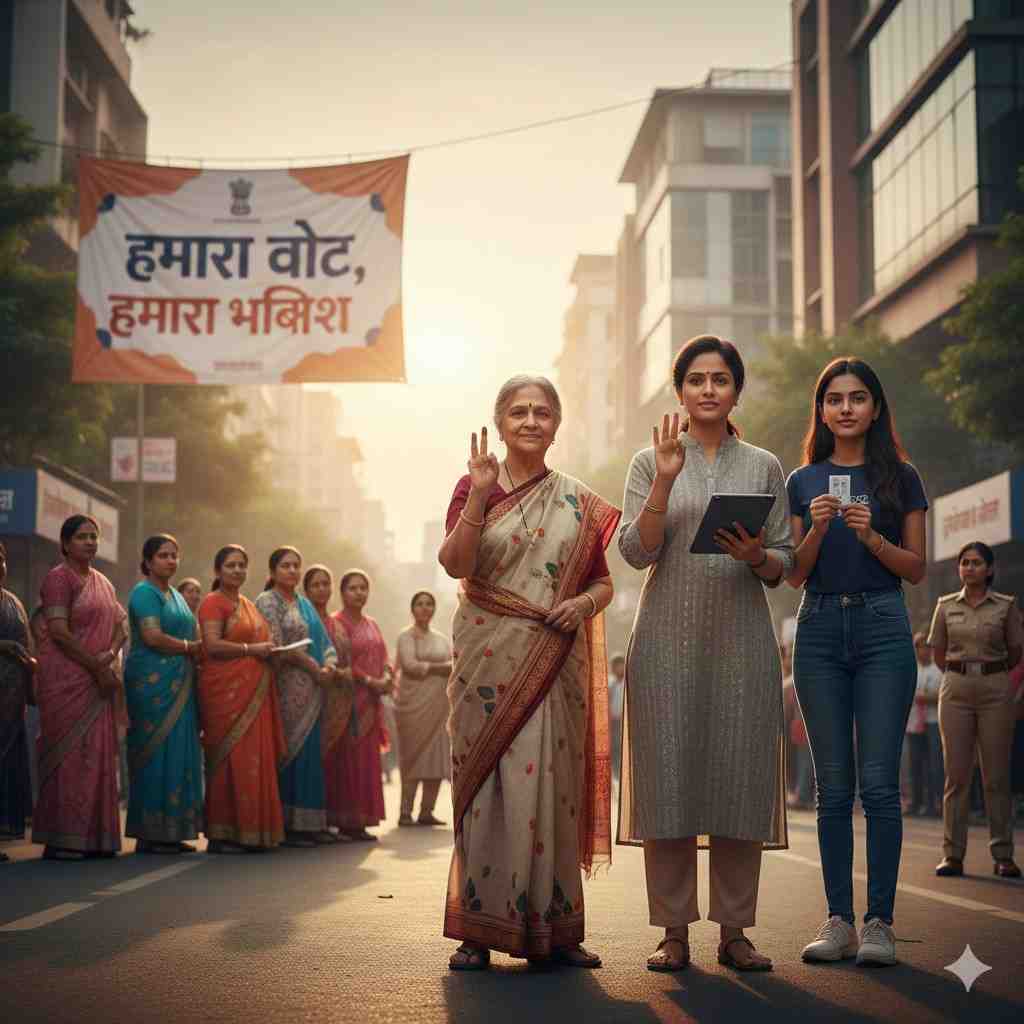
Women: The Backbone of Democratic India Since India adopted universal suffrage in 1950, women have played an integral role in shaping the country’s democratic framework. From their participation in the freedom struggle to their increasing representation in politics, governance, and grassroots movements, Indian women have consistently broken barriers to contribute to the nation’s progress. However,
Women: The Backbone of Democratic India
Since India adopted universal suffrage in 1950, women have played an integral role in shaping the country’s democratic framework. From their participation in the freedom struggle to their increasing representation in politics, governance, and grassroots movements, Indian women have consistently broken barriers to contribute to the nation’s progress. However, while strides have been made, challenges remain in achieving true gender parity in the democratic landscape.
Key Milestones in Women’s Democratic Participation
1. Early Representation
- Constituent Assembly:
- Women like Sarojini Naidu, Rajkumari Amrit Kaur, and Hansa Mehta were pivotal in drafting the Constitution, advocating for gender equality and social justice.
- Pioneers in Politics:
- India saw its first female Prime Minister, Indira Gandhi, in 1966, a monumental moment showcasing women’s leadership capabilities on the global stage.
2. Grassroots Empowerment
- 73rd and 74th Constitutional Amendments (1993):
- Reserved 33% of seats for women in Panchayati Raj Institutions (PRIs) and Urban Local Bodies, enabling millions of women to enter local governance.
- Women now hold over 46% of leadership positions in PRIs, showcasing their growing influence in grassroots democracy (Ministry of Panchayati Raj, 2022).
3. Recent Advances
- Women’s Reservation Bill (2023):
- The 106th Constitutional Amendment reserves 33% of seats in the Lok Sabha and State Assemblies for women, marking a historic step toward gender equity in legislative bodies.
- Increased Voter Turnout:
- Women’s voter turnout has consistently increased, surpassing male turnout in several states during recent elections (Election Commission of India, 2022).
Current Status of Women in Indian Democracy
1. Representation in Governance
- National Level:
- Women currently constitute 14% of the Lok Sabha and 11% of the Rajya Sabha, significantly below the global average of 26% for national legislatures (Inter-Parliamentary Union, 2023).
- State Assemblies:
- While states like Bihar and Rajasthan have made strides, overall representation remains uneven across the country.
2. Grassroots Leadership
- Impact of PRIs:
- Women leaders in Panchayati Raj Institutions have driven transformative changes in healthcare, education, and sanitation.
3. Participation Beyond Politics
- Civil Society and Activism:
- Women have been at the forefront of movements like the anti-CAA protests and farmers’ protests, amplifying democratic dissent.
- Corporate and Legal Spheres:
- Policies like maternity benefits and gender diversity mandates have begun to address systemic barriers, fostering greater participation in corporate and legal arenas.
Challenges to Women’s Equal Participation
1. Socio-Cultural Barriers
- Patriarchal Norms:
- Women often face societal pressure to prioritize domestic roles over public leadership.
- Safety Concerns:
- Gender-based violence and harassment deter many women from active participation in politics and public life.
2. Economic Inequalities
- Financial Dependence:
- Limited access to financial resources restricts women’s ability to contest elections or lead independent campaigns.
- Gender Pay Gap:
- Economic disparities persist, impacting women’s capacity to invest in their careers and public roles.
3. Structural Challenges
- Political Dynasties:
- Female representation in politics often remains restricted to members of political families, limiting opportunities for grassroots leaders.
- Underrepresentation in Decision-Making:
- Despite progress, women are frequently excluded from key policy-making roles in both governance and party structures.
Steps Toward Greater Gender Equity
1. Strengthening Legislation
- Implementing the Women’s Reservation Bill:
- Ensure timely implementation and robust mechanisms to prevent tokenism.
- Gender-Sensitive Laws:
- Strengthen legal frameworks addressing harassment and violence against women in public spaces.
2. Empowering Grassroots Leadership
- Capacity-Building Programs:
- Provide training and resources for women leaders at the grassroots level to enhance their effectiveness and confidence.
- Financial Inclusion:
- Expand access to credit and funding for women candidates, particularly in rural and marginalized communities.
3. Fostering Cultural Change
- Public Awareness Campaigns:
- Promote narratives highlighting the importance of women’s participation in democracy.
- Educational Reforms:
- Incorporate gender sensitivity and civic education into school curricula to nurture future generations of women leaders.
4. Leveraging Technology
- Digital Platforms:
- Use digital tools to amplify women’s voices and facilitate virtual campaigns, reducing safety concerns.
- Data Transparency:
- Develop gender-disaggregated data systems to track progress in women’s participation across sectors.
Conclusion: A Path Toward True Equality
The evolving role of women in Indian democracy reflects a journey of resilience, progress, and untapped potential. While significant milestones have been achieved, there is a pressing need to address systemic barriers and ensure that gender equity becomes a cornerstone of India’s democratic framework.
By fostering inclusive policies, empowering grassroots leaders, and challenging socio-cultural norms, India can pave the way for a more balanced and representative democracy. The future of Indian democracy lies in ensuring that every woman’s voice is heard, respected, and valued as a vital part of the nation’s progress.











Leave a Comment
Your email address will not be published. Required fields are marked with *