

Exploring How the World’s Largest Democracy Balances Tradition and Modernity to Ensure Resilience and Growth Key Metrics: India’s Journey of Democratic Stability and Adaptation India’s democracy stands as a testament to resilience in a rapidly evolving global landscape. As countries grapple with political crises and rising authoritarianism, India’s commitment to democratic principles offers a model
Exploring How the World’s Largest Democracy Balances Tradition and Modernity to Ensure Resilience and Growth
Key Metrics:
- Democratic Longevity: India has conducted 17 general elections since independence in 1947, with a voter turnout of 67.4% in 2019.
- Global Influence: Ranked 46th in the 2023 Democracy Index, India is a major player in international forums such as the G20 and the United Nations.
- Economic Growth: India is the fifth-largest global economy, growing at 6.3% in FY2024, fueled by democratic governance and policy innovation.
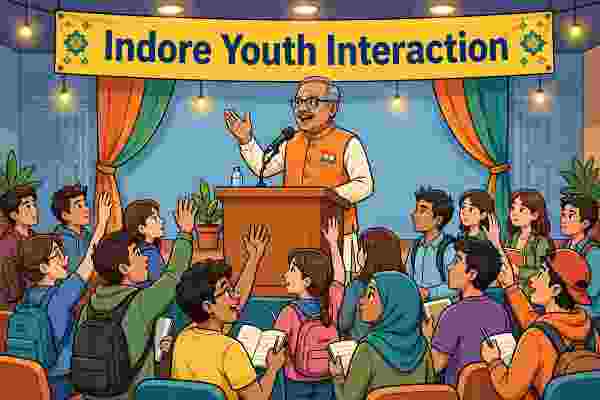
- Youth Participation: Nearly 65% of India’s population is under 35, reflecting its potential for a dynamic democratic future.
India’s Journey of Democratic Stability and Adaptation
India’s democracy stands as a testament to resilience in a rapidly evolving global landscape. As countries grapple with political crises and rising authoritarianism, India’s commitment to democratic principles offers a model of balance between stability and inclusivity. Yet, this journey has been far from perfect, underscoring both its achievements and systemic challenges.
A Strong Institutional Framework with Enduring Gaps
India’s democracy, built on the foundations of universal adult suffrage and a written Constitution, has provided a stable framework for governance. The Election Commission of India ensures regular, free, and fair elections, cementing citizens’ trust in the democratic process. However, issues such as voter suppression in conflict-ridden areas and money power in elections indicate a need for institutional reforms to enhance fairness and accountability.
While regular elections exemplify India’s resilience, the quality of representation remains uneven. Reports from the Association for Democratic Reforms reveal that 43% of Members of Parliament have declared criminal cases, raising concerns about the integrity of elected leaders.
Balancing Modern Aspirations and Traditional Structures
India’s governance reflects a duality: a progressive approach to modernization alongside a reliance on traditional social hierarchies. The Panchayati Raj system, which empowers rural communities, often mirrors the very caste and gender biases it aims to dismantle. Although women make up 46% of representatives in local governance, they frequently face barriers to exercising real authority.
Technological advancements like the Digital India initiative have streamlined services and brought governance closer to citizens, yet rural connectivity gaps and digital illiteracy persist. This digital divide undermines the inclusive aspirations of a democratic system, especially for marginalized groups.
Democratic Governance and Economic Growth: A Mixed Record
India’s democracy has undeniably propelled economic growth, with landmark reforms such as the Goods and Services Tax (GST) and welfare programs like the Mahatma Gandhi National Rural Employment Guarantee Act (MGNREGA). These initiatives reflect an intent to reduce disparities and ensure equitable development.
However, the stark income inequality and underfunding in key sectors such as health and education reveal a disconnect between policy intentions and ground realities. The focus on headline-grabbing reforms sometimes overshadows grassroots issues, leaving rural and economically weaker sections vulnerable.
Global Leadership and Internal Contradictions
India’s rise as a global leader in forums like the G20 contrasts sharply with domestic challenges. While the nation advocates for inclusivity and collective action on the global stage, communal tensions and polarization within its borders raise questions about its democratic values.
Social media platforms, touted as tools of democratization, have become double-edged swords, amplifying misinformation and divisive narratives. These issues weaken the foundational principle of informed citizen participation and underscore the need for regulatory oversight.
Challenges for a Democratic Future
India’s democracy, while robust, is not immune to systemic challenges. Political polarization, corruption, and regional disparities remain significant barriers to achieving true inclusivity. Electoral reforms, greater representation of women and youth, and stronger enforcement of anti-corruption measures are critical for sustaining democratic stability.
Additionally, bridging the urban-rural divide and ensuring that governance addresses the needs of all citizens will be vital in maintaining democratic resilience.
Conclusion
India’s democracy is both a source of national pride and a work in progress. It showcases remarkable stability and adaptability but is not without contradictions and shortcomings. Addressing these critical issues will determine the future trajectory of its democratic model.
As India navigates its path forward, its democracy has the potential to remain a beacon for nations worldwide, provided it confronts its challenges with honesty and systemic reform. India’s democratic journey is a reminder that stability does not mean stagnation, and progress requires continuous introspection and action.








Leave a Comment
Your email address will not be published. Required fields are marked with *