
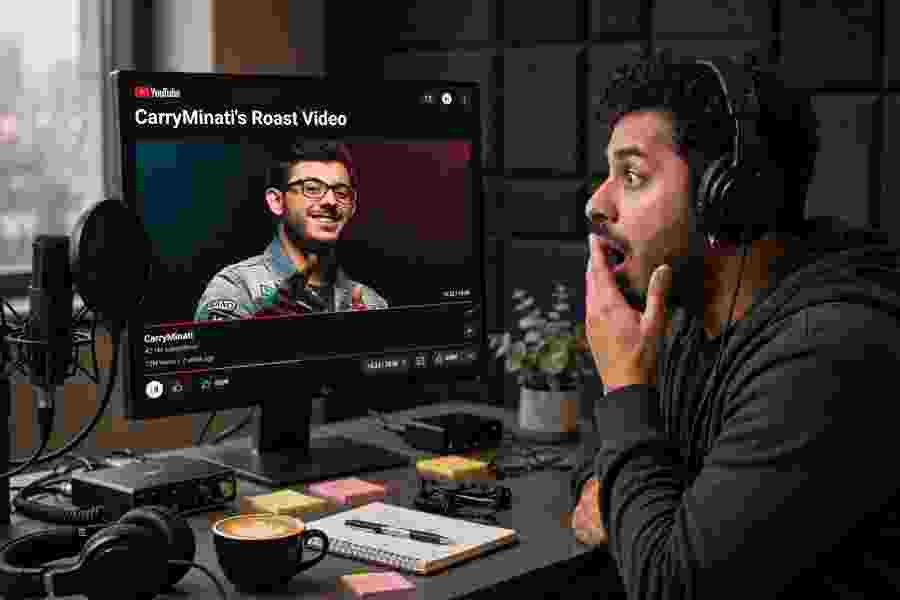
New Delhi, September 2026 — India’s digital entertainment ecosystem has witnessed a masterclass in professional maturity following the release of CarryMinati’s latest blockbuster roast video, “Podcast of the Decade.” While satirical takedowns in the creator economy often spark aggressive online wars, this latest clash has instead highlighted how industry players navigate criticism, audience retention, and
New Delhi, September 2026 — India’s digital entertainment ecosystem has witnessed a masterclass in professional maturity following the release of CarryMinati’s latest blockbuster roast video, “Podcast of the Decade.”
While satirical takedowns in the creator economy often spark aggressive online wars, this latest clash has instead highlighted how industry players navigate criticism, audience retention, and brand resilience when placed under the high-definition lens of mainstream satire.
The Anatomy of a High-Stakes Roast
Ajey Nagar, globally known as CarryMinati, sent shockwaves across Indian YouTube with the drop of “Podcast of the Decade.” True to his signature style, the content heavy-hitter leaned into sharp satire, heavily featuring clips from emerging creators and alternative talk shows to critique the current state of digital podcasting.
Among the prominent targets was the creator behind the YouTube channel Super Talks by The Moving Ship—a platform boasting over 1.8 million subscribers. Rather than dodging the crosshairs, the roast functioned as a massive digital megaphone, immediately funneling millions of eyeballs and intense cross-platform traffic straight toward the featured podcasts.
Monetizing the Critique: A Strategic Response
In corporate and creator public relations, how a brand responds to a public critique often dictates its long-term market survival. Defying expectations of a defensive or hostile retaliation, the host of Super Talks adopted an analytical and unperturbed posture.
Addressing the roast directly, the podcast creator embraced the development with commercial pragmatism, remarking that a comedian’s core mandate is to entertain. In a surprising twist, the host expressed genuine amusement, noting that he was glad his content could play a role in facilitating CarryMinati’s high-profile return to form. By framing the satire as a symbiotic traffic driver rather than a personal attack, the host successfully flipped a potential reputational liability into an asset for audience expansion.
Navigating Content Subjectivity and Alternative Perspectives
Beyond the viral banter, the response opened up a broader conversation regarding the commercial boundaries of digital media experimentation. Defending the eclectic guest selection on his show—which has previously ranged from alternative historical analysis to exploring past-life regression with specialists like Dr. Balbir—the host emphasized that content perception remains entirely subjective.
In an era where algorithmic homogenization pushes creators toward safe, repetitive formats, niche and alternative channels often rely on high-friction topics to carve out distinct market share. While acknowledging that not every discussion lands universally with audiences, the creator underscored a vital tenet of media production: exploring unconventional ideas does not necessitate disrespect or hostility, but rather a commitment to stretching the boundaries of digital curiosity.
The Bottom Line
CarryMinati’s roast and the subsequent graceful rebuttal illustrate a maturing creator economy. While satirical content thrives on dissecting internet trends, the response from Super Talks demonstrates that professional composure and media savvy can neutralize backlash instantly. In the modern attention economy, the winners are rarely those who fight the narrative, but those intelligent enough to leverage it.











Leave a Comment
Your email address will not be published. Required fields are marked with *