
Riyadh, September 2026 — A coordinated drone attack on Saudi Arabia’s vital East-West pipeline has brought the region’s energy infrastructure to a grinding halt, threatening approximately 4% of global oil supplies and triggering a sharp surge in international crude prices. What authorities view as a dangerous escalation in regional chokepoint warfare, market analysts describe as
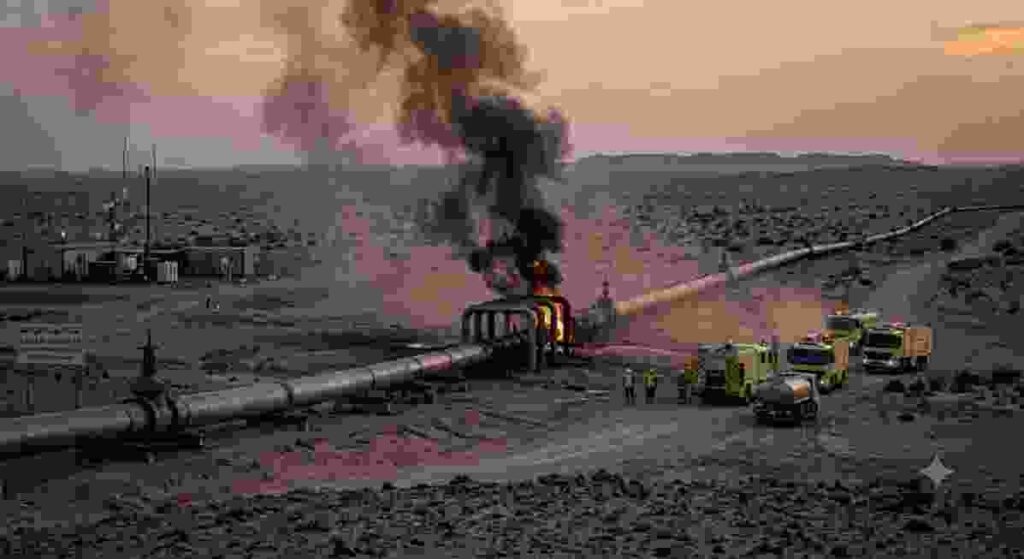
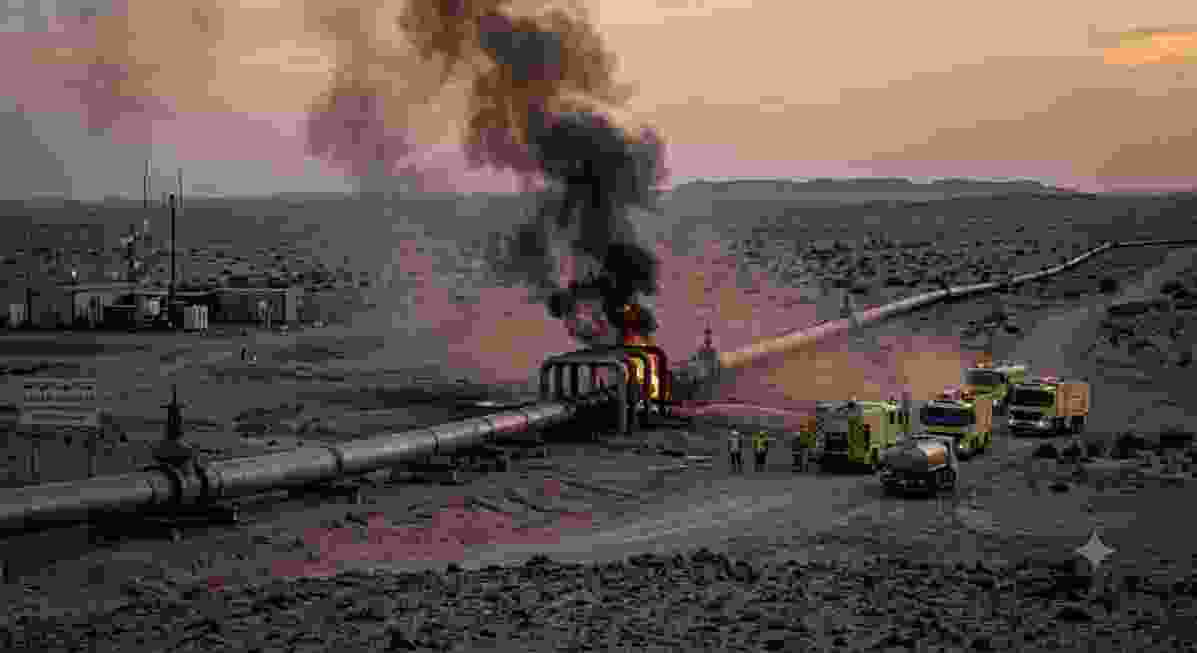
Riyadh, September 2026 — A coordinated drone attack on Saudi Arabia’s vital East-West pipeline has brought the region’s energy infrastructure to a grinding halt, threatening approximately 4% of global oil supplies and triggering a sharp surge in international crude prices.
What authorities view as a dangerous escalation in regional chokepoint warfare, market analysts describe as a critical blow to international energy security that could push oil costs back to wartime peaks.
Bypassing Hormuz: The Pipeline Under Siege
For years, Saudi Arabia relied on its strategic East-West pipeline—often called the Petroline—to bypass the volatile Strait of Hormuz. Stretching from the kingdom’s eastern oil fields across to the Red Sea port of Yanbu, the infrastructure allowed crude to move smoothly toward Europe and global markets even as regional tensions flared.
However, multiple drone strikes targeting areas near Riyadh and Medina have completely disrupted this critical bypass route. Energy experts estimate that while partial repairs could begin shortly, a full restoration of the pipeline will take five to six weeks, leaving a massive logistical vacuum.
Production Plummets and Markets React
The shutdown has had an immediate, crippling effect on Saudi output. Production has dropped drastically from roughly 10.9 million barrels per day earlier in the year to just 6.2 million barrels per day—a steep decline of over 40%.
Because international oil markets react heavily to even minor supply shortages, crude prices have spiked sharply, nearing previous wartime highs of over $110 per barrel. Without the capacity to transport oil to open export channels, the kingdom’s immense production potential remains effectively locked in place.
Geopolitical Finger-Pointing and Red Sea Risks
Saudi authorities attribute the drone launches to proxy networks operating within Iraqi territory, while international leaders point directly toward state-level involvement by Iran.
Compounding the crisis, Houthi rebel activities have intensified around critical southern Red Sea waterways, capturing key ports and islands near the Bab el-Mandeb strait. With both the Strait of Hormuz heavily constrained and Red Sea export corridors facing militant threats, Saudi Arabia finds its vital shipping routes squeezed from multiple directions.
The Ripple Effect on Global Importers
The crisis carries immediate consequences for major global buyers, particularly fast-growing Asian economies. India, which traditionally sources about 10% of its total oil imports from Saudi Arabia, faces mounting risks of imported inflation and tightened energy margins.
Bottom Line
The strike on Saudi Arabia’s premier pipeline is more than just a localized infrastructure failure—it is a stark reminder of how fragile global energy supply lines truly are. As international stakeholders monitor the fallout, the message is clear: when critical chokepoints and their alternatives are compromised, the entire global economy pays the price.











Leave a Comment
Your email address will not be published. Required fields are marked with *