
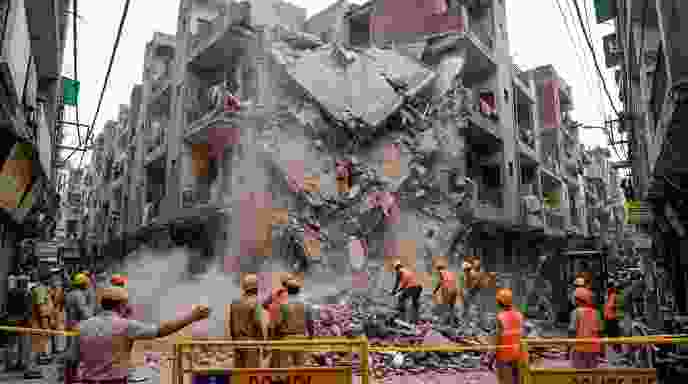
A five-storey building in Delhi’s Satya Niketan collapsed, highlighting significant safety concerns in urban construction practices. The incident raises questions about regulatory oversight and enforcement in the rapidly developing areas of the capital. New Delhi, September 2026 — A five-storey building in the bustling area of Satya Niketan collapsed, sending shockwaves through the community popular
A five-storey building in Delhi’s Satya Niketan collapsed, highlighting significant safety concerns in urban construction practices. The incident raises questions about regulatory oversight and enforcement in the rapidly developing areas of the capital.
New Delhi, September 2026 — A five-storey building in the bustling area of Satya Niketan collapsed, sending shockwaves through the community popular among South Campus students. Fortunately, no fatalities have been reported, but several individuals were injured, prompting urgent discussions about building safety regulations in the city.
Why Did This Happen?
Initial investigations suggest that the building’s structural integrity may have been compromised due to poor construction practices and lack of adherence to safety protocols. Experts indicate that the rapid urbanization of Delhi has often led to shortcuts in construction, where developers prioritize speed over safety. Such incidents have become alarmingly common in areas with dense populations and rising real estate demands.
What Does This Mean for India?
The collapse serves as a stark reminder of the ongoing challenges in urban planning and infrastructure development across India. With the country experiencing a housing boom, the need for stricter enforcement of building codes and safety standards has never been more critical. Urban planners and safety advocates are calling for a reassessment of current regulations to prevent future disasters.
What Should You Watch Next?
- Increased scrutiny of building permits and construction companies in Delhi.
- Upcoming government initiatives aimed at improving urban safety standards.
- Public response and advocacy for enhanced regulatory frameworks.
In the aftermath of the collapse, authorities are set to conduct thorough inspections of similar structures in the vicinity. The Delhi government has announced plans to review and possibly reform existing construction regulations to bolster safety measures. Activists and residents alike are demanding accountability from builders and stricter penalties for non-compliance, highlighting a growing public awareness regarding urban safety issues.
What Happens Next?
Looking forward, the incident is likely to catalyze a shift in policy regarding urban construction in India. Stakeholders, including government bodies and civil society organizations, are expected to advocate for a more robust regulatory environment focused on safety. As the city grapples with its infrastructure challenges, the need for sustainable and responsible urban development practices will be at the forefront of discussions in the coming months.












Leave a Comment
Your email address will not be published. Required fields are marked with *