
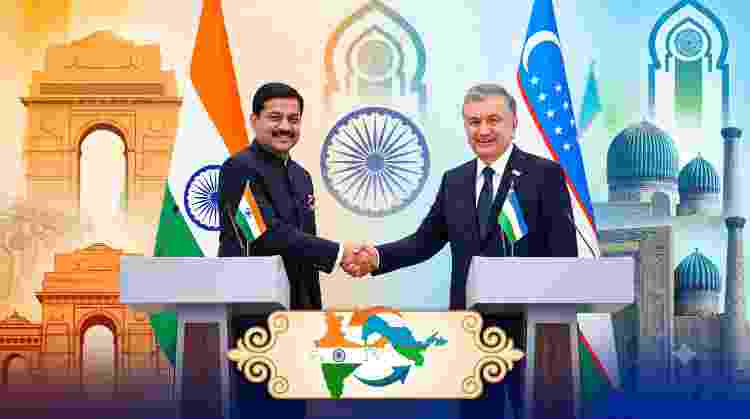
Prime Minister Narendra Modi and Uzbekistan’s President Shavkat Mirziyoyev have solidified a strategic partnership aimed at enhancing bilateral trade, security cooperation, and cultural exchanges. This agreement reflects both countries’ commitment to fostering deeper ties in a rapidly changing geopolitical landscape. New Delhi, August 2026 — During a recent joint press conference, Prime Minister Narendra Modi
Prime Minister Narendra Modi and Uzbekistan’s President Shavkat Mirziyoyev have solidified a strategic partnership aimed at enhancing bilateral trade, security cooperation, and cultural exchanges. This agreement reflects both countries’ commitment to fostering deeper ties in a rapidly changing geopolitical landscape.
New Delhi, August 2026 — During a recent joint press conference, Prime Minister Narendra Modi and Uzbekistan President Shavkat Mirziyoyev announced a significant partnership agreement designed to fortify political, economic, and cultural ties between the two nations. This initiative comes at a time when both nations are looking to expand their influence in Central Asia and beyond.
Why Did This Partnership Happen?
The agreement stems from a mutual recognition of the need for collaboration in an increasingly complex global environment. With geopolitical tensions rising, particularly in Central Asia, both India and Uzbekistan see this partnership as vital for regional stability. Experts suggest that this move is also influenced by India’s desire to counterbalance China’s growing influence in the region.
What Does This Mean for India?
The partnership opens doors for enhanced trade opportunities, particularly in sectors like textiles, pharmaceuticals, and renewable energy. As both countries emphasize economic cooperation, India aims to leverage Uzbekistan’s strategic location to bolster its connectivity initiatives, such as the International North-South Transport Corridor. Furthermore, the agreement could provide Indian businesses with greater access to Central Asian markets.
What Should You Watch Next?
- The impact of the agreement on India’s relations with neighboring countries.
- Potential investments from Indian firms in Uzbekistan’s infrastructure and energy sectors.
- Developments in security cooperation regarding counter-terrorism and regional stability.
Additionally, cultural exchanges are set to increase, promoting people-to-people connections that could further solidify this partnership. Educational collaborations and tourism initiatives are also on the horizon, aiming to strengthen mutual understanding and goodwill.
What Happens Next?
Moving forward, the success of this partnership will depend on effective implementation and the ability to navigate the evolving geopolitical landscape. Both nations must capitalize on their strengths to ensure that the partnership yields tangible benefits for their citizens. Observers will be keenly watching how this collaboration develops, especially regarding its implications for regional dynamics in Central Asia and India’s broader foreign policy objectives.










Leave a Comment
Your email address will not be published. Required fields are marked with *